


Do I need a party wall agreement for my extension?
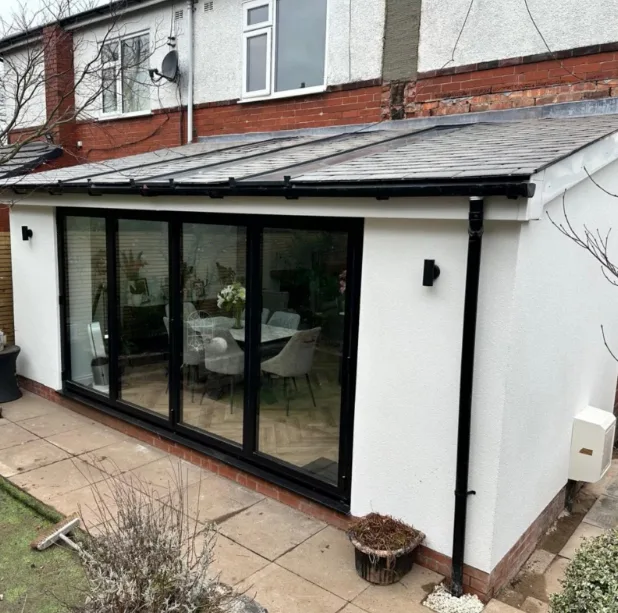
When you’re looking at carrying out a home extension or any major adaptation to a ‘party’ (i.e. shared) structure, it’s critical to understand the relevant regulatory frameworks.
Party wall issues and agreements are governed by the Party Wall etc. Act 1996. This act provides a framework for preventing and resolving disputes between neighbours where a party structure is involved. The Act is what we would call an ‘enabling’ act, because it gives and codifies your (the homeowner’s) rights to undertake work which might otherwise be considered trespass or a nuisance. However, it also protects your neighbour from work you might want to carry out.
What are my responsibilities under the Party Wall Act?
Under the Party Wall etc. Act 1996, you have a duty to give all adjoining owners (the neighbours whose plot your land directly connects to) notice of any works you’re carrying out, unless they are considered exempted work.
Notice must be served where the building owner intends any construction work as described in Sections 1, 2, and 6 of the Act. The scope is limited to:
- Section 1: Erecting a new wall at a boundary that is not already built on.
- Section 2: Work on existing party structures such as party walls, floors, partitions, or party fence walls.
- Section 6: Excavations up to 6m away from a neighbouring building or structure, subject to specific depth criteria.
When do I not need to give a party wall notice?
There are two main scenarios where you will not need to give formal notice. The first is for ‘de minimis’ works, which are minimal tasks unlikely to have a structural impact or cause damage, such as re-plastering or minor internal electrical works.
The second scenario falls under specific rights in Section 2(2), which may include:
- Making good or repairing a party structure due to defects.
- Cutting into a wall to insert flashing or weatherproofing.
- Demolishing a party structure of insufficient strength and rebuilding it to fulfil its purpose.
Even if not strictly required, speaking to your neighbours before any work begins is always considered best practice.
Who do I have to notify and what is the notice period?
The specific neighbours you must notify depend on the work being carried out. There are three primary types of notification:
- Line of Junction Notice (Section 1)
- Party Structure Notice (Section 3)
- Notice of Adjacent Excavation (Section 6)
A Party Structure Notice must be issued two months prior to starting work. Section 1 and Section 6 notices must be issued at least one month before. As a principal contractor, we believe discussing these issues with neighbours before issuing formal paperwork reduces the potential for disputes.
What information must be included in a party wall agreement or notice?
While there is no standard government form, your notice could be challenged in court if it fails to provide the relevant information. Most homeowners use the RICS standard form. Requirements include:
- For Line of Junction: A description of the proposed wall and your desire to construct it.
- For Party Structure: Name/address of the owner, nature of the work, and the proposed start date.
- For Adjacent Excavation: Your proposals, statement on whether you will underpin or strengthen the neighbour’s foundations, and associated plans.
How does the party wall dispute resolution process work?
Where there are disputes, Section 10 of the Act provides a mandatory resolution process. If a neighbour dissents (objects) to the notice or fails to respond within 14 days, a dispute is deemed to have arisen.
In this case, both parties must either:
- Agree on a single Agreed Surveyor.
- Appoint their own individual surveyors to mediate and reach an Award.
If the other party refuses to appoint a surveyor within 10 days of a dispute arising, you can request the statutory authority to appoint one for them to ensure the project can move forward.
Disclaimer: These blog posts reflect the experience and opinion of our organisation as primary contractors working in the construction sector. We are not Registered Building Control Approvers, legal professionals, planning professionals or affiliated with any Local Planning Authority. We will always recommend that our customer seek guidance from their Local Planning Authority on all matters relating to planning permission or building regulations and it is your responsibility to do so.
Recent News

16 July 2026
How Are Doors Kept Secure? | A Homeowner’s Guide
8 July 2026
Can You Paint uPVC Windows and Doors?
2 July 2026
What Do Window Energy Ratings Mean for Your Home?
29 May 2026
French vs Sliding vs Bifold doors – Which is Better for the Back of Your House?