


What Do Window Energy Ratings Mean for Your Home?

When you start planning a home improvement project, understanding Window Energy Ratings is one of the most valuable steps you can take. If you’ve ever though about replacing your double glazing, you’ve likely come across Window Energy Ratings on display models. They usually appear as bright, multi-colored rainbow stickers slapped onto the glass, showcasing a letter grade.
But what do these letters and numbers actually mean for your daily life, your winter heating bills, and the long-term comfort of your home? Let’s take a deep dive into the science, the scales, and how to choose the right energy-efficient products for your next project.
What is a Window Energy Rating?
The concept of Window Energy Ratings was first introduced to the UK market in 2004 by the British Fenestration Rating Council (BFRC). Before this system was established, comparing the energy efficiency of different windows was a massive headache for homeowners. Salespeople could make big claims about their glass, but consumers had no standard yardstick to verify those claims.
The rating system changed all that. By establishing a unified, standardised scale, it allowed homeowners to compare different brands, frame materials, and glazing styles side-by-side.
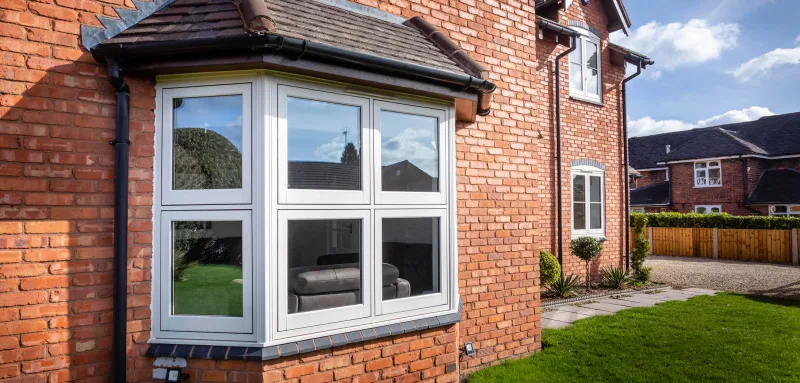
While the BFRC is the market leader, other bodies also issue Window Energy Ratings. You might see identical-looking rainbow labels certified by Certass or the British Standards Institute (BSI). Regardless of which logo is at the bottom, they all evaluate the whole-window performance – meaning they test the glass, the spacer bars, and the frame together, rather than just the glass on its own.
How Are Windows Rated? (The Formula)
To understand how Window Energy Ratings are calculated, we have to look behind the scenes at the physics of a window. The rating isn’t just a guess; it is determined by a precise mathematical formula that balances heat loss against natural solar gain.
Energy Index = (Solar Heat Gain) – (Thermal Heat Loss + Air Leakage)
This formula is what ultimately decides the final Window Energy Ratings of a product. When bodies calculate Window Energy Ratings, they look at three distinct performance metrics:
1. The U-Value (Thermal Transmittance)
The U-value measures how much heat escapes from inside your home through the window assembly. It is calculated in watts per square meter-kelvin ($W/m^2K$).
The lower the U-value, the better the window is at keeping your expensive central heating inside your home. Old single-paned windows often have U-values as high as $5.0W/m^2K$ or more. Modern double glazing pushes this down significantly to keep you warm.
2. The G-Value (Solar Factor)
Windows aren’t just barriers; they are also passive heaters. The G-value measures how much solar energy (free heat from the sun) can pass through the glass and into your living space.
A higher G-value means the window is highly efficient at letting warm sunlight penetrate and help heat your home naturally during cooler months.
3. The L-Value (Air Infiltration)
Even if your glass is incredibly advanced, a poorly sealed frame will let cold wind whistle right into your living room. The L-value measures how airtight the window frame and seals are. The lower the L-value, the fewer cold drafts you will experience on windy days.
Decoding the Grades: A++ down to C
Comparing Window Energy Ratings helps you choose between budget and peak performance. The scale starts at A++ (the absolute peak of energy efficiency) and goes down to E.
If you check the Window Energy Ratings of modern double glazing, you’ll see they usually fall within the A to C range. If you are looking to install new windows, you must pay attention to legal baselines: in the UK, building regulations mandate minimum Window Energy Ratings of band C for any replacement glazing.
At Allgood Construction, we aim much higher than the legal bare minimum. All our premium double-glazed window options are highly energy-efficient, boasting outstanding Window Energy Ratings up to A+ to ensure your home stays cozy year-round.
Explore Our High-Performance Window Range
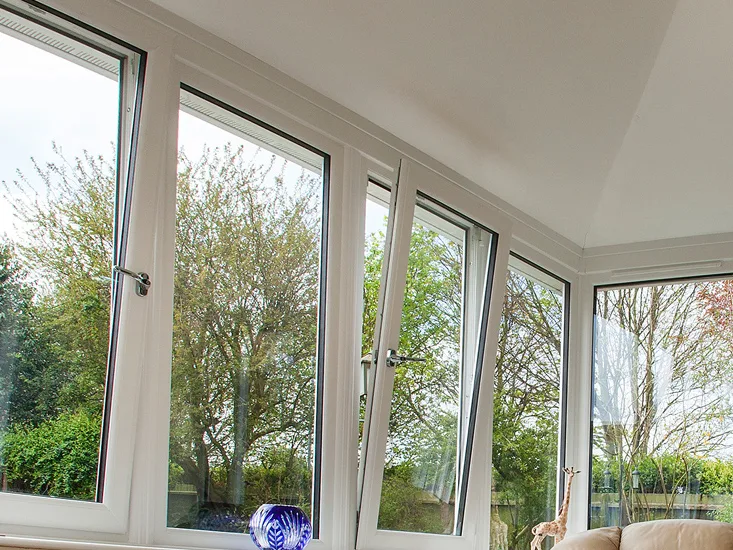
Choosing the right window style is about balancing aesthetic appeal with excellent thermal performance. When you invest in high Window Energy Ratings, you want a style that perfectly complements your home’s architecture.
Explore our made-to-measure range to find the perfect fit:
uPVC Casement Windows: Our most popular, versatile, and secure window style.
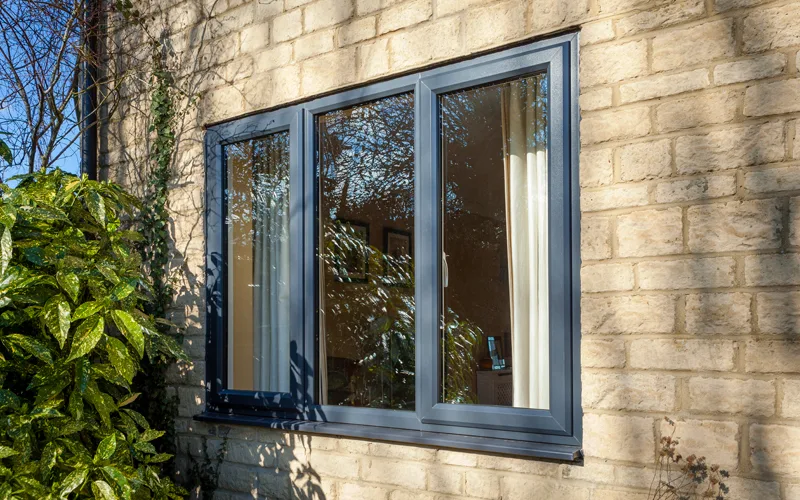
- uPVC Flush Casement Windows: A sleek, flat-profile window that mimics heritage timber with ultra-modern thermal efficiency.
- uPVC Sliding Sash Windows: Perfect for period or heritage properties, offering classic aesthetic appeal with highly insulated modern frames.
- uPVC Tilt & Turn Windows: A smart, dual-opening design offering secure ventilation and easy cleaning alongside high thermal ratings.
- uPVC Bow & Bay Windows: Add space, depth, and floods of natural light to your living space without compromising on insulation.
Why Should You Upgrade to High-Rated Windows?
Why should you pay attention to Window Energy Ratings? Beyond simply obeying Building Regulations, upgrading to windows with top-tier Window Energy Ratings has a massive impact on your home’s ecosystem.
The primary benefit is thermal comfort. Cheap, poorly-insulated windows create a cold zone near the glass. This temperature difference causes air to circulate rapidly, creating artificial drafts. High-performing windows keep the indoor pane much closer to room temperature, eliminating drafts entirely.
Additionally, highly-rated windows help resist internal condensation. When warm, moist air inside your home hits a freezing cold window pane, it turns into water droplets. Over time, this condensation can encourage mold growth. Highly insulated windows keep the glass warm enough to prevent this moisture from forming in the first place.
If you are planning a larger home transformation, we also specialise in building highly insulated, energy-efficient Home Extensions and converting cold spaces with the cutting-edge hup! building system.
Ready to Upgrade?
Understanding Window Energy Ratings empowers you to make an informed choice that balances your immediate installation budget with your long-term energy goals. Next time you browse, look for certified Window Energy Ratings to guarantee your investment pays off.
If you’re ready to transform your home with windows that look fantastic and keep your heating bills down, the family-run team at Allgood Construction is here to help. Contact us today to book your free consultation!
Recent News
16 July 2026
How Are Doors Kept Secure? | A Homeowner’s Guide
8 July 2026
Can You Paint uPVC Windows and Doors?
29 May 2026
French vs Sliding vs Bifold doors – Which is Better for the Back of Your House?
29 May 2026
How to Maintain Your uPVC Windows: A Complete Longevity Guide