What Are Permitted Development Rights?
- Allgood Conservatories

- Apr 17
- 12 min read
If you’re looking to extend your home, whether this is through a home extension, a
loft conversion, a conservatory, garden room or any similar structure, it’s absolutely
critical that you understand your permitted development rights.
Permitted development rights are originally derived from the Town and Country Order 2015 (General Permitted Development) (England) and the Town and Country
Planning Order 2024 (General Permitted Development) (England) (Amendment) We’ll refer to these as the GPDO from now on.

How Do Permitted Development Rights Work?
Permitted development rights are the rights that the householder has which allow them to improve and extend their own home without the need to apply for planning permission. In effect, parliament has given you (the homeowner) planning permission in advance to carry out certain projects, and only so long as they fully comply with the GPDO.
Government technical guidance stresses that these rules must be interpreted
carefully, and there are potentially significant financial consequences if works are
carried out outside permitted development rules without planning permission.
The Local Planning Authority (LPA) takes the responsibility of ensuring full
compliance with the GPDO, and if your condition does not comply with any condition
of the GPDO then you will need full planning permission. You can find more
information on planning permission in our dedicated planning permission blog. There are some important words that we come across in permitted development. Such as:
Curtilage – curtilage is a legal term which refers to the enclosed land
immediately surrounding a house or dwelling. This usually includes your
garden, yard and driveway.
Principal elevation – this refers to the wall or walls which constitute the front of
your house.
Side elevation – this refers to the walls or walls which constitute the side of
your house.
What Are The Different Types of Permitted Development Rights?
So, let’s take a look at the Government's technical guidance on your permitted
development rights. Firstly, let’s discuss the eight ‘classes’ of development right. These are:
Class A, which covers enlargement, improvements or alterations to the house
(i.e. rear or side extensions) and general alterations (i.e. windows and doors).
Class B, which covers alterations to the roof (i.e. loft conversions and dormer
windows)
Class C, which cover other types of alterations to the roof (i.e. re-roofing or
the installation of roof lights/windows)
Class D, which covers the rules for erecting a porch
Class E, which covers the provision of buildings and other development within
the curtilage of the house.
Class F, which covers the provision of hard surfaces within the curtilage of the
house (i.e. driveways)
Class G, which covers the installation, alteration, or replacement of a
chimney, flue or soil and vent pipe.
Class H, which covers the installation, alteration, or replacement of microwave
antenna such as satellite dishes.
We’ll focus on discussing classes A through to E, since they primarily relate to the
type of work that we carry out. Where an extension covers multiple classes, the build must comply with all aspects of each class. This is often the case where, for instance, a rear extension involves moving the flue or soil pipe or removing a chimney as part of a renovation project.
It’s also important to be aware that other legal regimes still apply when a project falls
within permitted development. These include but are not limited to building
regulations approval, the Party Wall Act 1996, Listed Building Consent, and
environmental regulations.
The complexity of navigating all of these interlinked regulatory and legal frameworks
can be challenging for customers. Which is why your choice of contractor is so
critical. At Allgood Construction (NW) we have significant experience in navigating
construction and planning regulation and helping customers understand these rules.
However, ultimately, the responsibility for understanding planning and permitted
development rules does fall on the house owner.

What Are The Limitations Of Class A Permitted Development?
The first limitation on Class A permitted development is whether a house has been
converted under Part 3 of Schedule 2 of the GPDO – i.e. whether other permitted
development rights have been used to change the usage of the property.
This means that if your house was original a shop, betting office, office, agricultural
building (i.e. a barn conversion), or a similar type of property which was changed into
a house then you will usually not have the ability to use Class A permitted
development rights.
The second limitation is about the amount of space that the extension takes up on
your plot of land (this is sometimes referred to as the 50% rule). So, your extension
and other buildings on your land (excluding the original house) must not exceed 50%
of the curtilage (this is one of the terms that we defined at the beginning) of the plot.
The third limitation is related to the height of the roof of the extension. An
enlargement, improvement or alteration must not be higher than the height of the
highest part of the main roof. This exclude the height of chimneys, firewalls, parapets
or anything else – for this purpose the ridgeline of the roof is used.
The fourth limitation is related to the height of the eaves. The height of the eaves for
the improved, enlarged or altered house cannot be higher than that of the original
house.
The fifth limitation is whether the extension would:
a. Extend beyond a wall which forms the ‘principal elevation’ (this is another
term we defined at the beginning) of the original dwelling house
b. Extend beyond a wall which ‘fronts’ (i.e. faces) the highway and forms a side
elevation of the original dwelling house.
This generally means that you cannot extend beyond the front wall of the property
under Class A permitted Development rights. Class D rights, which we’ll discuss
later, covers porches to the front of the property, but these are not possible under
class A rules.
Where you have more than one wall facing the front, for instance if you have bay
windows or you have ‘L-shaped’ front walls, all of these form the principal elevation
that you cannot extend beyond.
If you occupy a corner plot, so you have two walls facing the highway, there will be
additional restrictions on the side which faces the highway.
All of this means that if you’re extending to the front of the property, you will generally
need to have planning permission (and you can find our guide here and we have
another article specifically talking about our experience with front extensions here.
The next limitation relates to the projection and the height of the extension. So,
where you have a detached house you may extend 4 metres off the back of the
property, where you have a semi-detached or terrace house you may extend three
metres off the rear wall of the property. The height of the extension also cannot
exceed 4 metres. This only applies to single storey extension.
A further limitation relates to the size of larger single-storey rear extensions under
permitted development. For properties not located on Article 2(3) land (this includes
conservation areas, Areas of Outstanding Natural beauty, or similar protected
locations) and not on Sites of Special Scientific Interest, permitted development does
allow deeper extensions. For a single storey rear extension, you can go to 8 metres
for a detached house, and 6m for a semi-detached. There is also the same 4 metre
height restriction.
This type of extension is subject to a neighbourhood consultation scheme. We’ll
typically refer to this as Larger Homes Extension or Prior Approval Extension. We’ll
go into this type of extension in a little more detail later on.
It should also be noted that where the rear wall of the house is ‘stepped’ (i.e. the
back walls have different projections into the garden), then each one of these walls
will form the rear wall of the house. This means that the projection is counted from
each of these walls.
The next limitation under Class A refers to where the dwellinghouse would be more
than a single storey. A two storey extension cannot extend more than 3 metres from
the rear wall of the original house, and must not be built within 7 metres of the
boundary of the curtilage of the house which has been enlarged.
This does technically allow for a two storey extension under permitted development
rules. However, in practice building a two storey extension under these rules is
higher risk from a contractor and architectural perspective and most architects will
not proceed without full planning permission. At Allgood Construction (NW) Ltd we
share this approach, and will not build a two storey extension without planning
permission. You can read more about two storey extensions on our blog.
Another limitation is the “50% rule” for side extensions. So, where the extension
would go beyond the wall forming the ‘side elevation’ of the house (i.e. the side wall)
then it cannot be higher than 4 metres, it cannot have more than a single storey, and
it cannot be wider than half of the width of the original house.
What this means is that if your house is 7 metres wide, then you can build up to 3.5m
to the side. If your house is 8 metres wide, then you could built up to 4 metres to the
side.
There is also a specific exclusion in your Class A rights for verandas, balconies or
raised platforms. This same rule excludes installation, alteration or replacements of
microwave antenna, chimney, flue, soil and vent pipes, or roof alterations under your
Class A rights. However, this falls under other classes.
Class A Permitted Development Conditions
There are also other conditions:
The external walls of an extension should be constructed of materials that provide
a similar visual appearance
Pitched roof on an extension should be clad in tiles that give a similar visual
appearance to those used on the existing house roof.
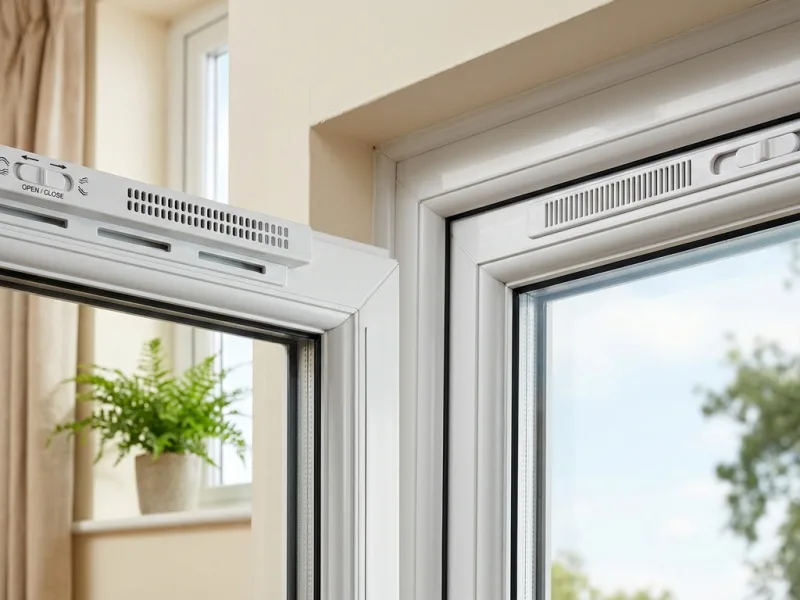
Where replacing old windows with uPVC windows, or using new uPVC
windows in an extension, these should have a similar visual appearance to
those in the existing house.
In practice, there is often variability from Local Planning Authority to Local Planning
Authority on these points. Interpretation and application of these conditions is
influenced by local context and planning policy priorities.
Similar looking tiles and similar looking bricks are usually fine, and in many areas
the Local Planning Authority takes the perspective that you’re allowed to render the
outside of your house without there being a planning issue. How visible the
extension is from the main road will likely affect this decision. Ultimately, because
there is a variance in how LPAs view these conditions, the best solution is to call
your LPA and ask for clarification.
It also worth noting that conservatories are excluded from the requirement for similar
visual appearance.

What Exclusions Fall Under Class B Permitted Development?
Class B deals with additions to the roof and the first exclusion under Class B is the
same as Class A, if a house has been converted under Part 3 of Schedule 2 of the
GPDO (i.e. whether other permitted development rights have been used to change
the usage of the property) then development is not permitted.
The second exclusion is if any part of the house would exceed the highest part of the
existing roof. The highest part of the roof is defined as the ridgeline of the main roof,
there may be lower ridgelines but only the main roof ridgeline matters. Chimneys,
firewalls, parapet walls and other protrusions above the main roof ridge line should
not be taken into account when considering the height of the highest part of the roof
of the existing house.
The next exclusion is no part of the house can extend beyond the plane of the
existing roof slope which forms the principal elevation of the house. The effect of this is that dormer windows as part of a loft conversion, or any other enlargement of the
roof space, are not permitted development on a principal elevation that fronts a
highway and will therefore require an application for planning permission. Roof lights
may be permitted development, however.
Also, the restriction on the roof facing the highway is the same as in Class A.
To be permitted development any additional roof space created must not increase
the volume of the original roof space of the house by more than 40 cubic metres for
terraced houses and 50 cubic metres for semi-detached and detached houses. Any
previous enlargement to the original roof space in any part of the house must be
included in this volume allowance.
Alterations to the roof of a house for loft conversions involving the creation of
balconies are not permitted development and will require planning permission.
Installation, alteration or replacement of chimneys, flues or soil and vent pipes will
often be necessary when loft conversions are undertaken. Whilst these are not
permitted development under Class B of Schedule 2 to the Order, they may be
permitted development under Class G
There is also no permitted development for homes on Article 2(3) land – i.e. homes
in National Parks, Areas of Outstanding Natural Beauty conservation areas, and
World Heritage sites. In these cases, you would need to pursue planning permission.
There are also similar conditions on the visual appearance roof extensions as there
are home extensions, namely that materials used in any exterior work should be of a
similar appearance to those of the existing house. However, since dormer windows
have a limited visual impact this is usually quite simple.
What Is Class C Permitted Development?
Class C permitted development covers any other alteration to the roof of a house
that doesn’t involve enlargement of the house. So this would cover the installation of
roof lights but not extensions.
Once again, there is an exclusion for any house which has been converted under
Part 3 of Schedule 2 of the GPDO. There is also a restriction if the protrusion of the
alteration would project more than 0.15m.
What Are Class D Permitted Development Rights?
Class D permitted development covers the rights for an erection of a porch outside
any external door of a house. Once again, the exclusion for any house converted Part 3 of Schedule 2 of the GPDO holds.
The rules for a porch is that the external ground area of the structure (i.e. the
footprint of the porch) must not exceed 3 square metres, no part of the structure can
be more than 3 metres above ground level, and no part of the porch can be within 2
metres of any boundary of the curtilage of the property.
What Are Class E Permitted Development Rights?
Class E Permitted Development Rights covers a host of ‘other’ structures which are
‘incidental to the enjoyment of the dwellinghouse’. This includes swimming pools, oil
or gas containers, sheds, garages, garden room and so on. Once again, the
exclusion for any house converted Part 3 of Schedule 2 of the GPDO holds.
The first rule is the 50% rule, the total coverage of the curtilage of the property
(excluding the original house) in buildings, enclosures, containers and such forth
cannot exceed 50% of the property. This will include any extensions that you’ve had
carried out under your Class A permitted development rights.
There is also a restriction on building anything under your Class E rights in front of
the principal elevation of the property. Under Class E rights you are also limited to a
single storey which cannot be more than 4 metres tall with a dual pitched roof, 2.5
metres tall if it is within 2 metres of the boundary, or 3 metres in any other case.
Planning permission would be required if it a listed building, or if it would require any
balcony or veranda, or if it Article 2(3) land.
How Does Prior Approval For Extenstions Work?
There is a term that you are likely to have come across, prior approval. Some
projects still fall under permitted development but will require that you go through the
prior approval process. This is not full planning permission but often requires
architectural drawings and a community approval process.
Prior Approval is not full planning permission, but allows councils to assess specific
impacts on transportation networks, flooding risk, noise impact, design and
appearance for a larger extension.
When does permitted development not apply?
As already discussed, if a house is built on Article 2(3) land (i.e. conservation areas,
national parts, Areas of Outstanding Natural Beauty, World Heritage sites) then you
cannot use permitted development for most of the Classes relevant to extensions.
Flat and Maionsettes also cannot use permitted development rights to expand their
property, nor can houses converted under Part 3 of Schedule 2 of the GPDO.
LPAs can also remove permitted development rights using an Article 4 Direction.
This is a legal mechanism which allows council to require planning permission, with
the most common justification being to preserve historic streets, preserve
architectural character, and prevent incremental visual change.
Permitted development rights are not static, this article was written in March of 2026,
and may need to be updated in the future. Since 2015, numerous amendments have
been made to permitted development to expand or clarify rights.
Get In Touch With Allgood Construction Today
This is not intended and is not a comprehensive list of all of the permitted
development rules and we would highly recommend that you still take the time to
read through the Government’s technical guidance. The ultimate responsibility for
permitted development will always lie with the householder, but hopefully this will
allow you to understand in plain language the technical guidance provided by the
Government.
If you're looking to find out more about a new home extension project, get in touch with our friendly team of experts today, or get started with an instant quote. We're always ready to bring your dream construction projects to life.
Disclaimer: These blog posts reflect the experience and opinion of our organisation
as primary contractors working in the construction sector. We are not Registered
Building Control Approvers, legal professionals, planning professionals or affiliated
with any Local Planning Authority. We will always recommend that our customer
seek guidance from their Local Planning Authority on all matters relating to planning
permission or building regulations and it is your responsibility to do so.


Comments